
The Hot Springs UFO of 1897
A Mystery Airship in the Ouachita Hills

In May of 1897, two Garland County lawmen claimed they encountered something extraordinary in the hills northwest of Hot Springs, Arkansas.
Constable John J. Sumpter Jr. and Deputy Sheriff John McLemore said their horses refused to continue toward a brilliant light in the darkness. When the men went ahead on foot, they reportedly found a cigar-shaped flying machine on the ground, several human occupants nearby, and one man filling a large sack with water.
The crew even offered them a ride.
And according to the story, they said their travels would eventually take them to Nashville, Tennessee.
That last detail is especially strange, because on the same date given in the reproduced account, inventor Arthur W. Barnard really was flying a hydrogen airship at the Tennessee Centennial Exposition in Nashville.
But the Hot Springs story did not happen in isolation. Arkansas was already caught up in the nationwide mystery-airship craze of 1896 and 1897, with earlier reports involving landed machines, mysterious inventors, women aboard, water stops, bright electric lights, and invitations to ride.
And over the next century, the Hot Springs encounter picked up details that do not appear in the earliest version at all — including Jessieville, Blue Ouachita Mountain, Highway 7, and cattle rustlers.
So what did Sumpter and McLemore actually encounter?
A secret experimental aircraft?
A newspaper-era tall tale?
A story shaped by the biggest aviation mystery of its time?
Or something else entirely?
Watch the Drive
The companion RealRoads video follows Arkansas Route 227 through the Ouachita foothills northwest of Hot Springs.
The precise location of the alleged 1897 encounter is unknown, so the route should be considered representative of the landscape rather than the documented path taken by Sumpter and McLemore.
In This Episode
- The May 1897 airship encounter reported by John J. Sumpter Jr. and John McLemore
- Why the exact location of the encounter is still unknown
- The nationwide mystery-airship wave of 1896–1897
- Earlier Arkansas sightings that closely resemble the Hot Springs story
- The strange recurring detail of airship crews stopping for water
- Arthur W. Barnard’s real May 1897 airship flights in Nashville
- Whether a 60-foot airship could realistically carry the crew and equipment described
- Why Jessieville, Highway 7, Blue Ouachita Mountain, and cattle rustlers appear to be later additions
- The unresolved May 6 versus May 7 date discrepancy
- How newspapers may have helped spread the story faster than any airship could
Pronunciation Oops
In the episode Ric uses the name Bernard for Arthur W. Barnard.
Images from the story
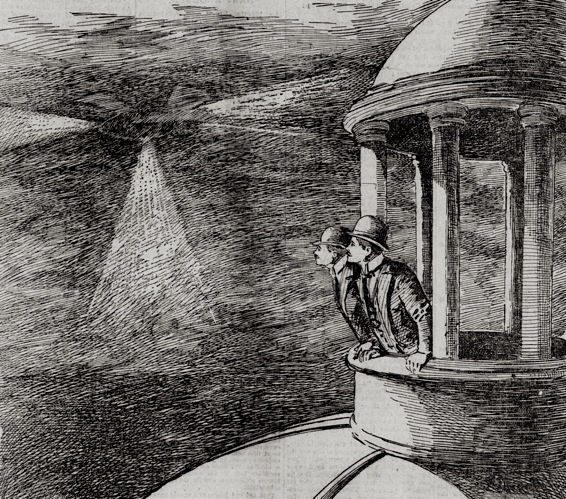
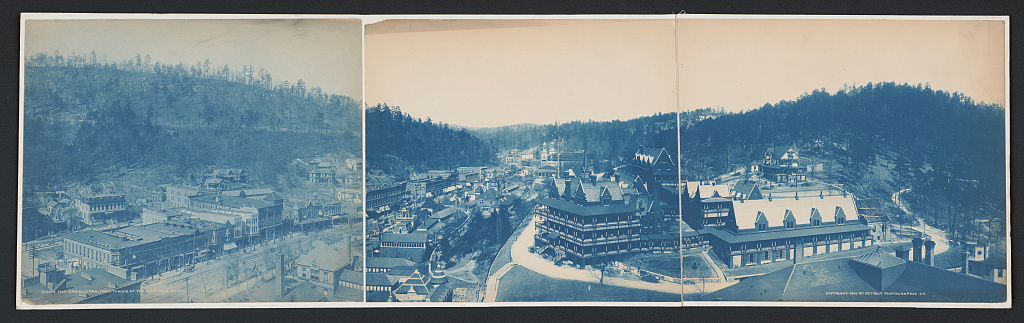
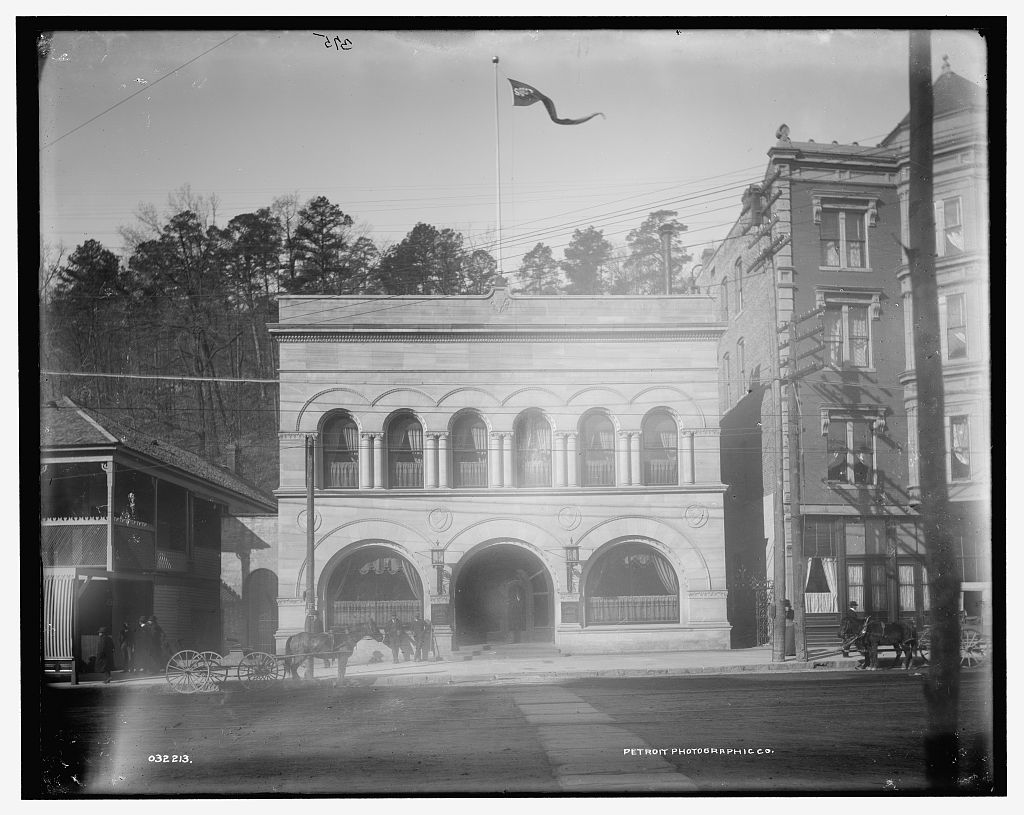
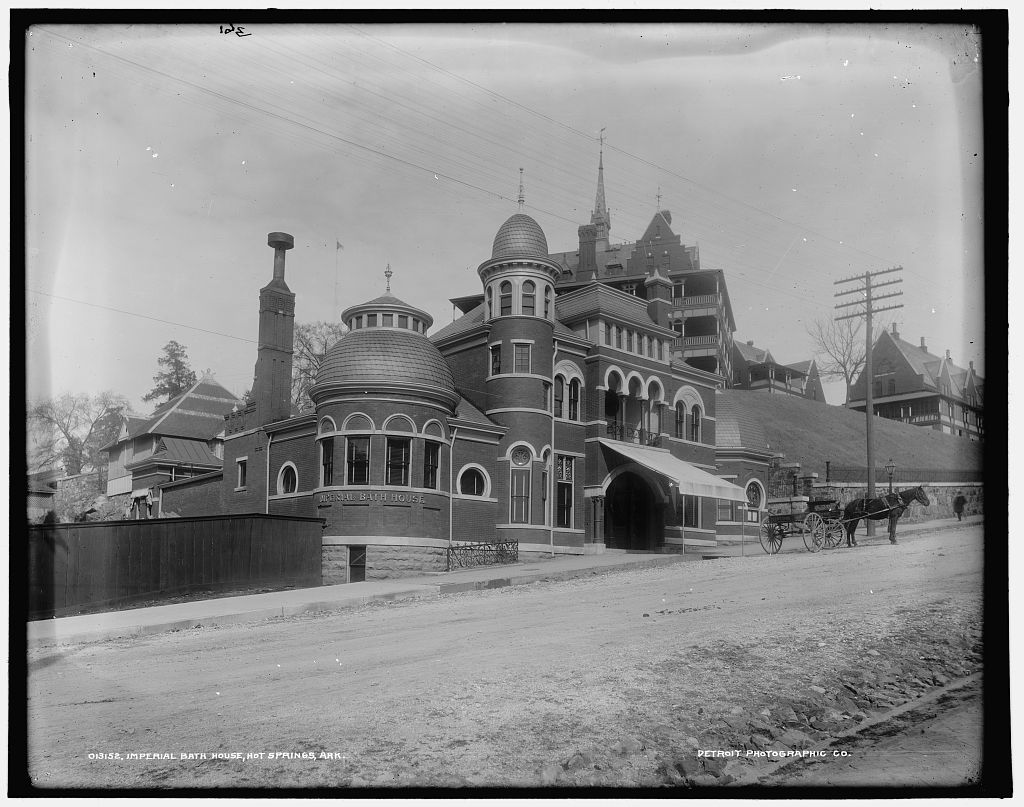
Because the original Hot Springs account is frustratingly light on surviving visuals, most of the images on this page are here to show the world around the story rather than the event itself.
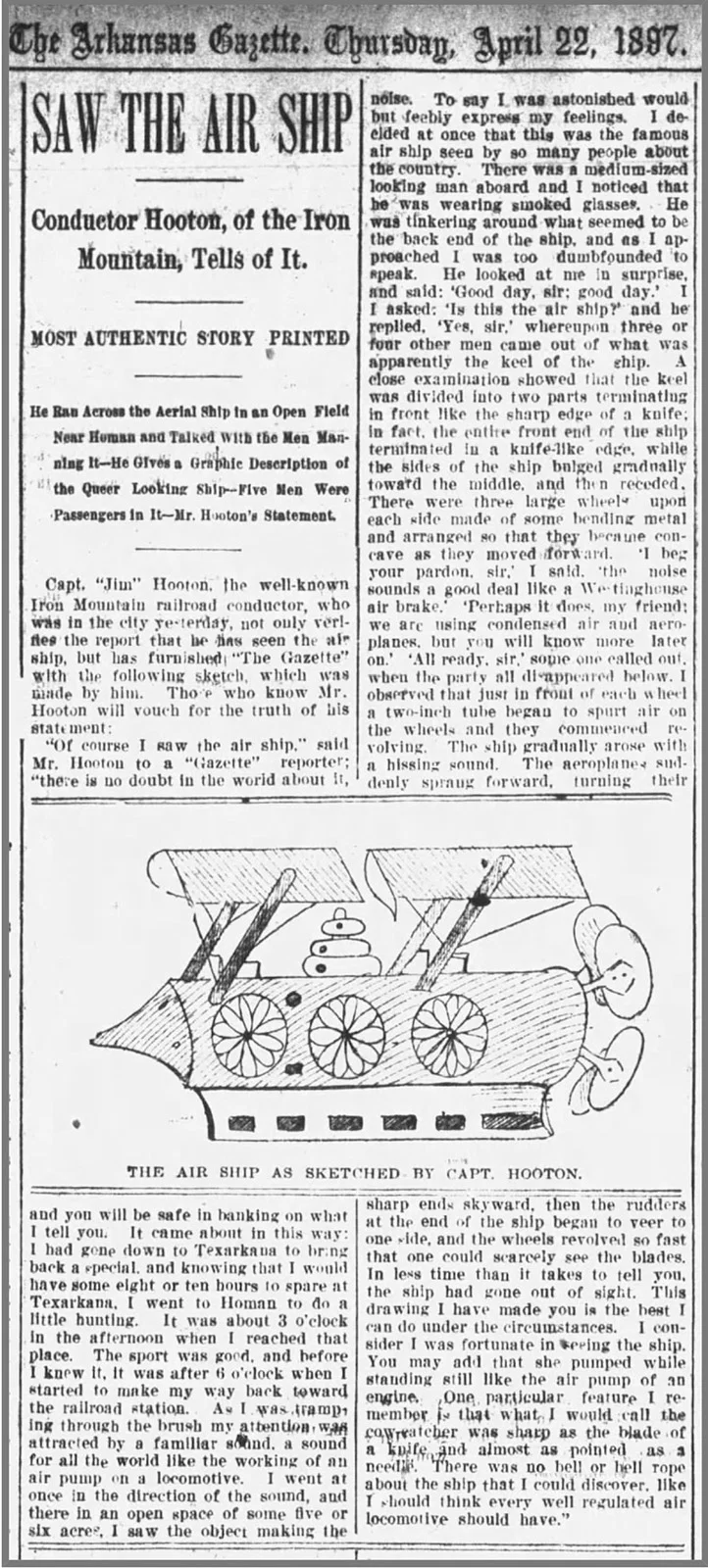
We don’t have a confirmed photograph of the airship, the exact encounter site, or even reliable portraits of the two lawmen at the center of the story. So instead, these images help establish the setting: what Hot Springs looked like in the late nineteenth century, how mystery airships were being depicted in newspapers at the time, and the kind of mechanical flying machines people were already imagining before the Hot Springs story appeared.
In other words, think of them as historical context rather than documentary evidence of the encounter itself.
Research trail
Sources & Further Reading
Research trail
Sources & Further Reading
Special thanks to John Davis for his research assistance.
- “UFO Sightings (Airship Sightings),” Encyclopedia of Arkansas . Brian Irby, Arkansas State Archives. Overview of the 1896–1897 Arkansas airship wave, including the Hooton and Hot Springs accounts.
- Arkansas Gazette, April 22, 1897, p. 3. “Saw the Airship.” Contemporary account of railroad conductor James Hooton’s alleged encounter with a landed airship near Homan, Arkansas, including his description of the machine.
- Arkansas Gazette, May 9, 1897, p. 1. “Swore They Saw It.” Contemporary reprinting/reporting of the Hot Springs airship account attributed to Constable John J. Sumpter Jr. and Deputy Sheriff John McLemore.
- Arkadelphia Southern Standard, May 14, 1897, p. 2. “Swear They Saw It.” Contemporary Arkansas reprint of the Sumpter and McLemore airship story.
- Hot Springs Sentinel, May 1897. Original newspaper credited with publishing the Sumpter–McLemore account. The relevant issue has not been located in surviving Garland County Historical Society holdings; the story is known through contemporary reprints and later reproductions.
- The Modern News, Harrisburg, Arkansas, April 23, 1897. Contemporary source for the Harrisburg-area mystery-airship story involving a landed craft, human occupants, water collection, and an invitation to ride. Library of Congress newspaper record.
- Galveston Daily News, April 24, 1897. “The Airship in West Texas.” Contemporary account of Uvalde County Sheriff Henry W. Baylor’s alleged encounter with an airship crew seeking water.
- Weimar Mercury, May 1, 1897, p. 6. “The Airship at Uvalde.” Follow-up reporting on the Uvalde airship story.
- Weimar Mercury, May 22, 1897, p. 7. “Airship Story Exploded.” Contemporary report exposing the Uvalde airship account as a hoax.
- The New York Times, May 7, 1897. Contemporary report on Arthur W. Barnard’s May 6 airship flight at the Tennessee Centennial Exposition in Nashville.
- San Francisco Call, May 7, 1897, p. 1 . “This Airship Flew for Miles.” Contemporary report on Arthur W. Barnard’s Nashville airship demonstration, including the craft’s hydrogen inflation and pedal-powered propulsion.
- Garland County Historical Society, research correspondence and vertical-file research, September 2026. Used to investigate the survival of the original Hot Springs Sentinel material, local records concerning Sumpter, McLemore and C. G. Bush, and later Hot Springs-area aviation history.
- Arkansas State Archives / Brian Irby, research correspondence, September 2026. Consulted regarding the May 6 versus May 7 dating of the Hot Springs encounter and the origin of later descriptions of the officers’ purpose that night.
- 1897 mystery-airship press chronology, compiled from contemporary newspaper reports. Used to compare recurring elements in the Hot Springs story with earlier reports from Arkansas, Texas, Tennessee and elsewhere, including landed craft, human crews, bearded operators, women aboard, water stops, bright lights and invitations to ride.
- Airship lift calculations, calculated for this episode using the approximate dimensions reported in the Hot Springs account and the lifting capacity of hydrogen. Used to compare the reported sixty-foot craft with the payload and technology it would have required in 1897.
Transcript
Episode Transcript
Transcript
Episode Transcript
You're listening to What's Outside the Window, the stories, history, and sometimes tragedy hiding in plain sight along America's highways. I'm Rick Wayland, and today we're in the Ouachita Mountains northwest of Hot Springs, Arkansas looking for a place that... well, nobody actually knows where it is.
But somewhere out here, in May of 1897, two Garland County lawmen said they came across something that absolutely should not have been sitting in the Arkansas woods. A brilliant light coming from a 60-foot cigar-shaped flying machine. There were several people standing around it, and one guy was filling a sack with water, and a woman was also seen holding an umbrella nearby. Oh, and then the crew apparently offered the officers a ride.
So, today we're looking for a UFO. Well, sort of. Let's see what's outside the window.
We're traveling Arkansas Highway 227 through the hills northwest of Hot Springs. And before we go any further, I need to make something abundantly clear. We do not know that this is the road these two men traveled. We don't actually know exactly where the encounter happened. The earliest version of the story gives us a direction and a rough distance: northwest from Hot Springs, four to five miles through the hills. That's pretty much it. No highway number—not that there were highways back then. No named mountains, no convenient little roadside signs saying "Mystery Airship, Next Left," nothing.
So, Highway 227 is representative. It puts us in the same general landscape: wooded ridges, hollows, winding roads, and the Ouachita foothills northwest of the city. And once you're out here, honestly, it's not really hard to understand why the story stuck around. Even today, you can leave Hot Springs and within a few minutes feel like you're a lot further from town than you really are. Now imagine this landscape back in 1897. No pavement, no headlights, no utility poles, no glowing Dollar General sign three miles away reminding you civilization still exists. Once you got outside of town, it got dark, and according to the account, it was also raining.
The two men at the center of all this were John J. Sumpter Jr., a constable, and John McLemore, a Garland County Deputy Sheriff. And on the night of May 6th, 1897, at least according to the version of their account that survives, Sumpter and McLemore rode northwest out of Hot Springs.
Why? Well... that's one of the first places where things get fuzzy in this story.
Modern versions will tell you they were hunting cattle rustlers near Jessieville. Another version says they were serving a subpoena. But the earliest wording I've been able to trace down doesn't say either one of those is true. It simply says they were "looking for parties." And no, not that kind of party. They weren't wandering around the Ouachitas hoping to find somebody with a keg and a fiddle. At least, I don't think they were. Maybe they were looking for suspects. Maybe somebody with a warrant. Maybe cattle thieves. Maybe everybody reading the Hot Springs Sentinel in 1897 knew exactly who these parties were, and nobody stopped to think that 129 years later, someone would be sitting behind a microphone saying, "Could you possibly be a little bit more specific?"
But, here we are. Based on the language we actually have, "looking for parties" is about as far as we can safely go.
And while Sumpter and McLemore were out looking for these mysterious parties, they saw a light. A very, very bright light.
According to their account, the horses noticed it too. As the men rode toward the light, the animals became increasingly reluctant to continue. Eventually, they just stopped. And if you're telling a strange story in the 19th century, that's almost perfect. People trusted horses back then. A person might lie to you, but a horse? A horse knew better. If your horse looked down the road and basically said, "Nope," that carried some weight. Sumpter and McLemore apparently decided the horses were being dramatic. They tied them up, took their rifles, and continued on foot toward the light, which is already more commitment than I would have shown. My horse refuses to go forward, congratulations horse, you're now the lead investigator.
We'll just put in the report that conditions prevented further investigation and head back to Hot Springs. But these two kept going. They walked for roughly another half mile, and then they said they found the source of the light.
And this is where the story stops being merely strange and drives completely off the road.
Sitting on the ground was what they described as a cigar-shaped flying machine, about 60 feet long. There was an intensely bright light associated with it—bright enough that the officers had apparently seen it from quite some distance away. And around the machine... well, there were people.
Not Martians, not little grey aliens, not giant bug eyes, not octopus men, but regular old people.
The account describes an older, or at least older-looking, man with a dark beard. There were also a couple of younger men, and there was a woman standing beneath an umbrella. I absolutely love that detail, because apparently if you're traveling across America in a secret flying machine decades ahead of anything known to exist, you still check the weather before leaving. That's responsible airship travel.
One of the men was doing something else. He was collecting water. Specifically, he was described as filling a large sack with water, which sounds bizarre, and it really kind of is. But remember that detail, because the water is going to come back.
The bearded man apparently did most of the talking. And instead of being alarmed that two armed Arkansas lawmen had just walked out of the darkness carrying Winchesters, the airship crew seems to have been pretty friendly. They talked, explained things, and eventually, they offered Sumpter and McLemore a ride. The officers declined, which, you know, I think was the correct decision at the time. I mean, I'm fairly adventurous, but if I'm walking through the Ouachitas at night and some bearded stranger climbs out of a 60-foot aircraft that's really not supposed to exist yet and says, "Hey, you want to hop in?" No, thank you. I've got horses, and they're apparently not very brave, but they're horses, and they need taking care of. So I'll just stay here, thank you.
According to the account, the crew explained that the bright light consumed a lot of their "motive power." Exactly what that "motive power" was isn't explained particularly well. There was an implication of electricity, which was wonderfully convenient back in 1897. Electricity was real, people knew it could do amazing things, but most people at the time didn't understand it well enough to know exactly what its limits were. So you could, more or less, say "electricity," and a large percentage of the audience would go, "Hmm, okay. Cool." It was basically the 19th-century version of saying something uses quantum physics. Sure, sounds impressive. But, moving on.
The bearded man also talked about where they were going. Eventually, he said they expected to wind up in Nashville, Tennessee.
And that one little detail makes this story considerably more interesting. Because on May 6th, 1897, there really was an airship in Nashville. Not a mystery airship, but a real one. Arthur W. Barnard was an inventor who had brought a dirigible to the Tennessee Centennial Exposition. And on May 6th, Barnard actually attempted to fly it. His machine was nothing like the miracle craft supposedly seen outside Hot Springs, though. Barnard's airship was essentially a hydrogen balloon with a very lightweight framework underneath it, and a propulsion system powered by the pilot. Basically, a guy was trying to pedal an airship. And here's the thing—it actually worked. Well, kind of. At least by 1897 standards, that's genuinely impressive.
But Barnard wasn't confidently cruising from city to city carrying passengers. He was trying to keep one extremely light experimental machine under some degree of control, and the wind still had its vote. A few days later, during another flight, Barnard's machine was blown away from the exposition grounds and came down miles away from where he intended.
That's what actual powered flight looked like in 1897. A lot of optimism, a lot of engineering, and a lot of guts, and every once in a while the atmosphere saying, "Well, that's nice, we're going this way instead." Which makes the Nashville line in the Hot Springs account really interesting. Maybe it's coincidence. Maybe somebody in Hot Springs knew about Barnard. Maybe news of his demonstration was circulating in regional newspapers. We know at least some newspapers were discussing Barnard's planned trial before it happened. But what we don't know is whether Sumpter or McLemore had seen any of that before their supposed encounter.
And that's why one little date discrepancy matters. The surviving version of the account says the encounter happened on the night of May 6th. A number of modern Arkansas sources give the date as May 7th. One day. It doesn't sound like much, but here, it really does matter. If the encounter did happen on May 6th, then we've got the airship crew saying they're heading toward Nashville on the same day Barnard is actually flying his airship. That's a pretty good coincidence. But, if the story actually originates on the 7th, then news of Barnard's demonstration has had more opportunity to move through the newspapers and telegraph reports. We've spent a fair amount of time trying to nail this all down. But, unfortunately, the original Hot Springs Sentinel issue that supposedly carried the account doesn't appear to have survived in the local historical collection.
The Garland County Historical Society checked for us. Their researchers tell us that the old Daily Sentinel and Sentinel-Star issues from this period have apparently not survived in their collection, which really is frustrating. Because that original paper could answer several really good questions all at once. What date did they give? What exactly did the officer say? How did the editor frame the story? Was it presented completely straight, or was there some tiny 19th-century wink in the wording that disappeared as the story got copied over and over again? We will never know.
What does survive is a statement attributed to Sumpter and McLemore, and supposedly sworn before a Justice of the Peace named C.G. Bush on May 8th. You'll occasionally see the affidavit itself treated as almost like proof. They swore to it. Well, okay. That tells us, assuming the reproduced version is authentic, that they were willing to attach their names to a story. That's important, but it doesn't really establish that a 60-foot flying machine was sitting in the Arkansas woods. People in 1897 were perfectly capable of screwing around. They simply had fewer ways to go viral. Newspapers printed hoaxes all the time. Editors printed outrageous stories because people enjoyed them. People signed humorous affidavits. And in the spring of 1897, Americans absolutely loved airship stories, because Hot Springs absolutely was nowhere near the first one.
For months, people across the United States had been reporting mysterious flying machines. The wave seems to have begun out west in late 1896, especially in California. At first, people reported lights moving through the sky. Then those lights became machines. Then the machines acquired propellers, wings, searchlights, engines, captains, passengers, engineers, and eventually, entire crews who were apparently perfectly happy to land, wander around, and chat with whoever happened to come along.
And as the stories moved eastward during the spring of 1897, they became increasingly elaborate. And Arkansas was right in the middle of it.
One of the best Arkansas examples came from a railroad man named James Hooton. Hooton said he encountered a landed flying machine near Homan, Arkansas on April 20th. And his account is spectacular. He supposedly came across a strange mechanical contraption sitting on the ground and spoke with one of the men operating it. Hooton was a railroad conductor. And the way he described this supposedly futuristic aircraft sounds exactly like you'd expect a mechanically-minded railroad man in 1897 to explain something beyond his experience. Gears, wheels, mechanical components, power systems... basically, I don't know what this thing is, but it's got a hell of a lot of machinery on it. And there was even a drawing. If you've seen Hooton's drawing, you'll understand why the artwork for this episode looks the way it does. It's... well, kind of steampunk. Obviously, nobody in 1897 would have used that word. The genre didn't exist. But visually, come on. Cigar-shaped body, framework, propellers, mechanical contraptions hanging all over the thing. You fully expect someone wearing goggles to crawl out with a 12-foot wrench.
And that gets at something I find fascinating about this entire mystery airship wave. It isn't that 1897 was copying steampunk. Steampunk eventually learned to look like 1897. This was the raw material. Victorian machinery pushed just a little further than Victorian machinery could actually go. Metal, electricity, gears, propellers, inventors, engineers... fantastic machines that were just believable enough because the real world was changing incredibly fast.
Then there's Harrisburg, Arkansas. Another airship story appeared there shortly before Hot Springs. This one supposedly occurred on the property of a former state senator. And listen to some of the details: an older man with a long dark beard, younger men, a woman, a landed airship, the crew collecting water, and an invitation to come aboard. Sound familiar? Because about two weeks later, Hot Springs gives us a dark-bearded man, younger men, a woman, a landed airship, water collection, and an invitation to ride. That's a pretty remarkable overlap. And it gets even better, because Arkansas wasn't the only place where these details were circulating.
On April 20th, 1897, another story came out of Uvalde, Texas. And yes, before we go any further, that is the same Uvalde, Texas that today is inseparably associated with the horrific attack at Robb Elementary School in 2022. That tragedy has absolutely nothing to do with the story we're telling here, but I don't want to casually say Uvalde and move on as though the name doesn't carry a very different meaning today. Our hearts remain with the victims' families, the survivors, and the people of Uvalde.
But our story takes place 125 years earlier. And strangely enough, it involves another lawman. Uvalde County Sheriff Henry W. Baylor claimed that around 10 o'clock one night, he noticed a bright light and heard voices behind his house. He went to investigate. And according to Baylor, there was an airship, on the ground, with three men. One of the men reportedly gave his name as Wilson and said he was from Goshen, New York. They even asked Baylor about another man they supposedly knew. And then, they wanted water. Again, they reportedly got water from a hydrant in Baylor's yard, boarded their airship, and headed north toward San Angelo.
So now we've got another law enforcement officer, another landed airship, another human crew, another conversation, and another water stop. Except the Uvalde case gives us something we don't have in Hot Springs: an ending. Because Sheriff Baylor eventually admitted he made it all up.
The supposedly compelling Uvalde airship encounter fell apart in late May, and contemporary reporting described the story as having been exposed. And that is extremely important. Not because Baylor proves Sumpter and McLemore were lying, he doesn't. But now we have a known hoax, during the exact same airship wave, using some of the exact same storytelling ingredients. A sheriff, a landed aircraft, human occupants, a friendly conversation, water, and then off they go. Which means those ingredients were not merely descriptions of something people might have genuinely encountered. They were also ingredients people knew how to use to construct an airship story. And suddenly that strange little detail from Hot Springs, the man filling a sack with water, doesn't look quite as unique.
Because the water keeps showing up. In Uvalde, they're getting water from Baylor's hydrant. In Harrisburg, they're just collecting water. In Hot Springs, someone's filling a sack with it. Apparently the biggest technological breakthrough required for transcontinental air travel in 1897 was a decent canteen.
And this matters because odd, specific details can make a story feel credible. If I tell you I saw a mysterious aircraft, okay. But if I tell you I saw a mysterious aircraft and while I was watching it, one guy was standing beside a creek filling a big sack with water, that feels different. It's weirdly specific. Why would somebody make *that* up? But then you discover everybody is getting water. Oh. So maybe that detail isn't evidence that the story is uniquely authentic. Maybe it's part of the developing mythology. Same with the bearded inventor. Same with the friendly crew. Same with the explanations about the machinery and the invitations to ride. By the time Sumpter and McLemore supposedly walked up to their 60-foot flying machine, almost every major ingredient in their encounter was already circulating in American newspapers.
And there's actually a line in their own account that makes this especially important. They reportedly said the machine resembled the illustrious "cuts" that had recently appeared in other newspapers. In other words, they had seen the airship stories. They knew what mystery airships were supposed to look like. That doesn't mean they lied, but it absolutely matters here, because nobody experienced these stories in a vacuum.
And honestly, the idea wasn't completely ridiculous in 1897. We know it was wrong in hindsight, they didn't. Look at the world around them. Electric lighting was spreading. Telephones existed. Railroads crossed the continent. Internal combustion engines were being developed, and new machines were appearing constantly. People alive in 1897 had watched technology accomplish things that would have sounded impossible when they were children. And everybody knew somebody was eventually going to figure out powered flight. The only question was who and when. So if somebody saw an unexplained light moving across the sky, the idea that some secretive inventor had finally cracked the problem wasn't automatically absurd. It probably sounded just plausible enough. And that's all a good mystery really needs. One newspaper prints the report, another paper reprints it, someone 50 miles away sees a strange light, now they know what to call it. It's the airship. Another account gets published, then another, and another, and details migrate between them. And before long, the mystery airship is crossing America, one newspaper column at a time.
Which brings us back to the 60-foot aircraft outside Hot Springs. Could something like that have actually flown? Well, there are problems. Actually, there are several. The officers estimated the machine at about 60 feet long. That sounds big, but for a lighter-than-air craft, length alone doesn't tell us much. Volume is what matters. A hydrogen balloon has to displace enough air to lift not only the balloon itself, but the framework, the propulsion system, all those lights, and of course, every person aboard and their supplies, and in this case, apparently someone's water collection. Let's give our mystery airship a narrow cigar shape, 60 feet long, 12 or so feet across. That gives us roughly 4,500 cubic feet of lifting volume. Under ideal conditions, that might provide somewhere around 300 pounds of gross hydrogen lift. 300 pounds. We've already got multiple people aboard. So, we're done. We haven't even built the aircraft yet.
Make it 15 feet wide and things improve, but much of the available lift still disappears just carrying the passengers. At 18 or 20 feet wide, the numbers start getting more workable, but now our long, elegant cigar-shaped machine is becoming, well, pretty chunky. At some point, we've stopped describing a cigar and started describing something you slice and put mustard on. And we still aren't accounting for the structure, the propulsion system, or the giant lights, let alone our mysterious sacks of water. Water is really, really heavy, by the way. 10 gallons weighs more than 80 pounds. 20 gallons is around 167. 30 gallons is pushing 250. Maybe the sack held barely anything. We really don't know.
But compare all of this with Barnard's actual machine in Nashville. Barnard was struggling to get one man and an extremely lightweight propulsion system through the air. The Hot Springs machine supposedly carried multiple adults, traveled long distances, landed wherever it wanted, produced a brilliant electric light, carried supplies, and apparently handled rainy Arkansas weather without much trouble.
If someone built that in 1897, they hadn't merely beaten the Wright brothers. They'd made the Wright brothers look like they weren't even trying, six years before Kitty Hawk. And then this remarkable technology apparently went nowhere. No aviation company, no government contract, no transportation network, no patent revolution, no surviving aircraft, no machine in the Smithsonian, nothing. Not even a roadside marker saying it happened.
Somebody supposedly built one of the most advanced aircraft on earth, landed outside Hot Springs, got some water, offered two cops a ride, and vanished from history, which, of course, is just a little inconvenient for us.
And then the story kept getting retold. And, of course, stories that get retold for more than a century tend to pick things up. Today you'll often hear that Sumpter and McLemore were hunting cattle rustlers. You'll hear Jessieville. Blue Washita Mountain. Scenic Highway 7. These details are now firmly attached to the story on websites and in later retellings. But they aren't in the earliest version we've been able to track. That version says the men traveled northwest from Hot Springs, four or five miles through the hills, and then, after their horses stopped, they walked about another half mile.
That's it. And that is really not a lot of geography. Jessieville is considerably further north. Highway 7 makes a great modern road to attach to the story, but it's further east. And we really can't prove the encounter happened there anyway. Which is, of course, why we're traveling Highway 227 today. Not because we've discovered the route, we haven't. We're using it because it puts us in the landscape the earliest account actually describes: hills, woods, northwest of Hot Springs. That's it. Without dropping a pin on Google Maps and pretending we've solved something that we haven't, we're using Highway 227 instead.
The cattle rustler detail is similar. Our local historical researcher believes that's why the officers were out there, and that may ultimately turn out to be correct. There might be something buried in a local file that establishes it. But so far, nobody has shown us the contemporary source. For now, they were just "looking for parties." And no, still not that kind of party.
There's another question I've kept returning to: If this was nonsense, why did Sumpter and McLemore put their names on it? They're not anonymous witnesses. Sumpter, especially, came from a prominent local family. He turns up in national sporting publications as a competitive shooter from time to time. This wasn't some mysterious drifter who came through Hot Springs, told an incredible story, and disappeared. If the account was a joke, he attached his name to it. If it was a hoax, same thing. If he genuinely believed he'd seen something extraordinary, well, same thing. And unlike Sheriff Baylor down in Uvalde, we haven't found the confession. No later newspaper item saying, "Okay, everyone, we made it up. Sorry." No letter explaining the prank. No interview 20 years later where somebody laughs and finally tells the story. Nothing.
And that's one reason the Hot Springs encounter survives. There's no clean ending. We can prove that nearly identical motifs existed beforehand. We can show that at least one remarkably similar lawman and airship story was a confirmed hoax. We can show that the aircraft as described would have represented an astonishing technological leap. We can point to a real airship experiment in Nashville happening at almost exactly the same time. But after all of that, we still can't tell you what Sumpter and McLemore actually experienced.
Maybe there was some sort of experimental balloon. People genuinely were experimenting with lighter-than-air craft flight at the time. Maybe the officers saw an unusual light and the story grew from there. Maybe someone played a prank on them. Maybe they pranked the newspaper. Maybe the newspaper pranked everyone. Wouldn't be unprecedented. Maybe the whole thing was influenced by the massive airship craze already moving through the country. You know, kind of like ancient aliens today. Or, maybe two armed lawmen walked through the rain somewhere northwest of Hot Springs on May 6th, 1897, and found something sitting in the woods that we still can't explain. That's definitely the most fun possibility. It's just not the only one.
And yeah, I'm deliberately calling this the Hot Springs UFO. Because today, the word UFO instantly brings certain things to mind. Aliens, flying saucers, government hangars, some guy on YouTube who's been promising full disclosure next week for about 11 years. That's not what I mean here. UFO simply means unidentified flying object. If Sumpter and McLemore really encountered some kind of flying machine they couldn't identify, then in the strictest sense, that's exactly what it was. Although, when they found it, I suppose it was technically an unidentified parked object. UPO. That doesn't have quite the same ring to it, and probably isn't helping us with Spotify search results either.
There's even one more piece of context that tells you just how widespread the airship mania had become. Even Arkansas politicians were talking about them. During the legislative battles over railroad regulation, the Arkansas Senate reportedly entertained a tongue-in-cheek idea that if these mystery airships were going to start hauling freight around the state, then Arkansas ought to figure out how to tax them, which might be the most believable thing in this entire episode.
Human beings secretly perfect powered flight decades ahead of schedule? I have questions. Government discovers a new form of transportation and immediately wonders how to tax it? Absolutely. No questions asked. The point is, mystery airships weren't some obscure topic hidden in fringe publications. They were everywhere. Newspapers, jokes, technology discussions, political humor, people talked about them. And then, something remarkable happened. Reality started catching up.
Count Ferdinand von Zeppelin's first rigid airship flew in 1900. The Wright brothers flew in 1903. And eventually, right here around Hot Springs, people tried to build dirigibles of their own. The Rice family later built the Arkansas Traveler, a real, local, hydrogen airship project. And when they tested it, they ran into one of those irritating problems the mystery airships never seemed to have. Physics. The machine struggled under its own weight. Reality was finally producing the aircraft people in 1897 had dreamed about. It was just doing it far more slowly. And maybe that's the best way to understand the great airship wave. People were imagining tomorrow right before tomorrow actually arrived. They knew human flight was coming. They knew electricity was changing the world. They knew inventors were building increasingly unbelievable machines. So when someone saw a strange light in the sky, the explanation wasn't necessarily an alien. It was an inventor. Some brilliant, secretive mechanic who had finally solved the puzzle. And of course the newspapers provided the rest: a propeller, a cigar-shaped body, a bearded captain, a passenger, a giant electric light, the familiar water stops, a destination. And eventually, a whole crew standing in the rain in the Ouachita Mountains inviting two Arkansas lawmen to climb aboard.
More than a century later, we can pick the story apart. We can show that Jessieville and Highway 7 aren't in the earliest version. We can compare Hot Springs to Hooton's machine, to Harrisburg, to Uvalde, and to Barnard's real airship in Nashville. We can point to the structural problems and the lifting volumes. We can show how the mythology was already built before Sumpter and McLemore ever supposedly saddled their horses. But out here in the Ouachitas, none of that really matters. Because somewhere out here, the story still lives. No marker, no historical sign, no roadside attraction, just the road, the trees, the hills, and one incredibly strange story from 1897 hiding in plain sight along America's highways.
I'm Rick Wayland. Thanks for coming along.
Listener notes
Join the Conversation
Share a thought, correction, local memory, or a story from the road. Your email address is never published.