
Old Mike: 64 Years Above Ground
The unidentified traveler who spent six decades in a Prescott funeral home
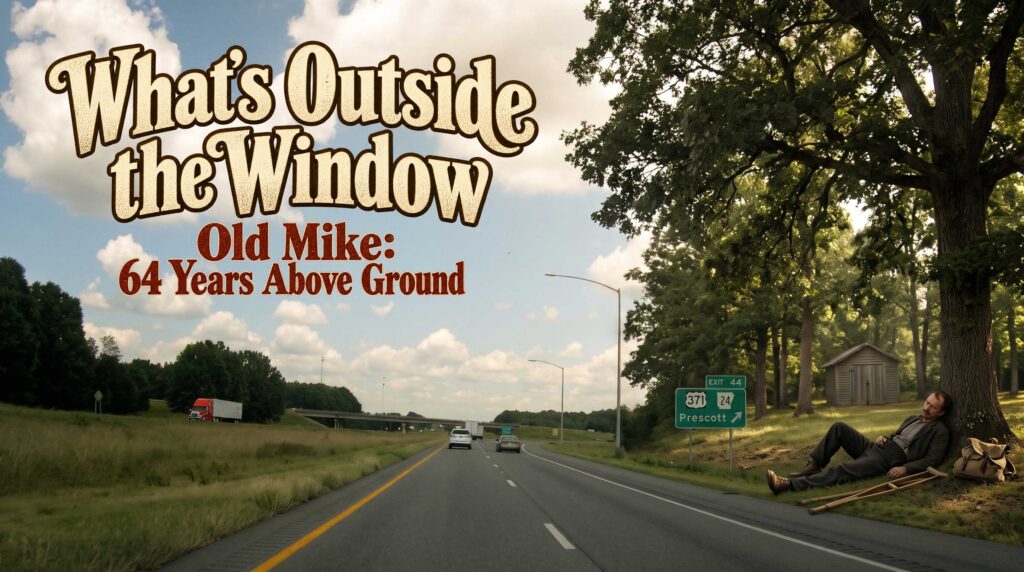
Old Mike: 64 Years Above Ground
The stranger who became one of Prescott’s most familiar faces.
On August 21, 1911, an unidentified man was found dead in Prescott, Arkansas. Nobody could establish his name or what had killed him. Local undertaker John D. Cornish embalmed the stranger, hoping someone would eventually recognize him. But what began as a temporary arrangement lasted nearly 64 years.
The man became known as Old Mike, and generations of Prescott residents grew up hearing about — and sometimes visiting — the unusual figure standing in the funeral home. He was finally buried in May 1975, still without a confirmed identity.
In this episode of What’s Outside the Window, Ric takes you along Interstate 30 to explore how an unknown traveler became one of southwest Arkansas’s most familiar faces, and why the answers to this mystery aren’t nearly as straightforward as they first appear.
Listen to the episode to discover:
- Why Old Mike remained at Cornish Mortuary for more than six decades.
- What Ric’s wife’s aunt Fran remembers about visiting Mike as a little girl in 1948.
- The mysterious connection to Little Rock, a possible brother in Chicago, and an unidentified man named J. M. Estes.
- What really led Arkansas authorities to require his burial in 1975.
- Whether modern DNA testing might finally reveal Old Mike’s identity.
Fran remembered those childhood visits for the rest of her life. As she put it:
“He was a part of my Prescott years. I’ll never forget him.”
Traveling through Prescott? Old Mike is buried at De Ann Cemetery, and the Nevada County Depot Museum has an exhibit exploring his remarkable story.
The full episode explores the history, the surviving evidence, and the questions that remain unanswered more than a century later.
Images from the episode
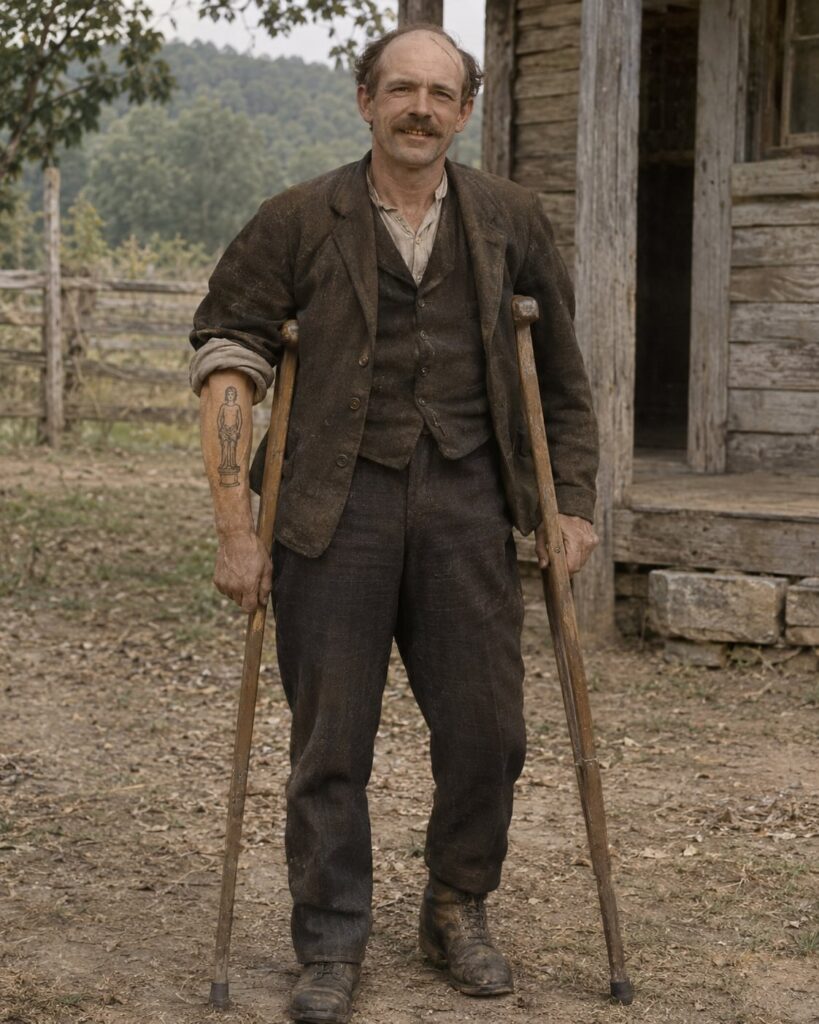
Historical newspaper photograph of Old Mike — Encyclopedia of Arkansas, courtesy of the Nevada County Depot Museum.
Old Mike beside the Cornish Funeral Home hearse — The Sandyland Chronicle, May 2004, photograph supplied by Mildred Munn.
Old Mike’s funeral, May 12, 1975 — Encyclopedia of Arkansas, courtesy of the Nevada County Depot Museum.
Photographs remain hosted by their respective publishers. Links open the original source pages.
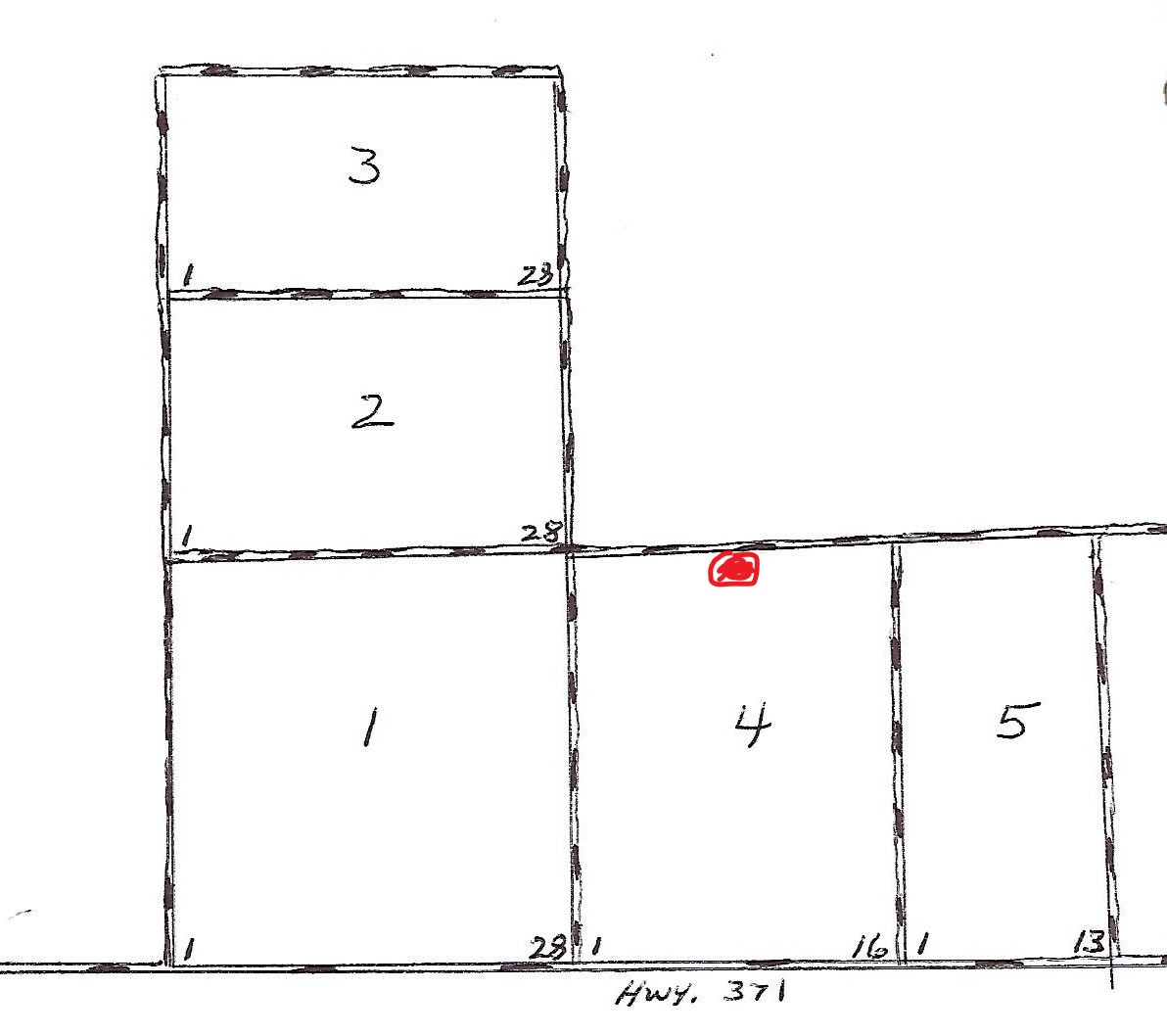
Old Mike's Gravesite
Research trail
Sources & Further Reading
Research trail
Sources & Further Reading
- Nevada County Picayune, August 25, 1911, “Unknown Man Dead in Park.” Contemporary account of the discovery, belongings, physical characteristics, and investigation. Historical newspaper title: Library of Congress, Chronicling America.
- Arkansas Gazette, August 12, 1911, “Police Docket.” Little Rock report naming J. M. Estes and Pat McFarland. See discussion in Encyclopedia of Arkansas: Old Mike.
- Arkansas Democrat, June 24, 1970. Interview with S. L. “Blue” Avery about Old Mike and the funeral-home display (consulted in historical research).
- Arkansas Gazette, May 17, 1975. Contemporary reporting on the burial, the Arkansas Board of Embalmers, and statements from Wayne Johnson, John Baker, Clyde Magness, and Thomas Cobb (consulted in historical research).
- Billy Burton, “Prescott’s Old Mike Finally Buried,” Hope Star, May 16, 1975, p. 1. Cited in the Encyclopedia of Arkansas.
- David Sesser, “Old Mike,” Encyclopedia of Arkansas (updated June 16, 2023). Later synthesis; some details differ from the contemporary 1911 reporting.
- Nevada County Depot Museum, “Restore Old Mike!” and Old Mike collection entry. Community history and museum interpretation.
- Jerry McKelvy, The Sandyland Chronicle, March 2003 and September 2018. Historical accounts and eyewitness recollections; copyright remains with their respective owners.
- Mike Nichols, “The Mystery of Prescott’s Ol’ Mike,” The Old Time Chronicle, February–March 1996, pp. 10–12, 42. Cited secondary historical research; original article should be independently consulted before attributing additional claims.
- Fran (Ric's wife's aunt), personal written recollection of visits to Old Mike beginning in 1948, provided October 2026 in response to a family research inquiry. Shared with permission; see the companion transcription on this site when published.
- UA Little Rock Center for Arkansas History and Culture, Tucker-related archival search and correspondence with Lauren Dawejko, October 2026. No Attorney General burial order recovered in the searched records.
- Encyclopedia of Arkansas: period image of Old Mike and photograph of May 12, 1975 funeral; both credited to the Nevada County Depot Museum and require image-reuse permission.
Transcript
Episode Transcript
Transcript
Episode Transcript
It's 1948, and I want you to imagine you're a little girl growing up in Prescott, Arkansas. You're in the first grade, school has just let out, and your older sister has decided there's someone she wants you to meet, but she won't tell you who it is. Usually, when your sister wants to introduce you to somebody, you might expect a friend from school, a new neighbor, or maybe someone she's taken a liking to. But this particular afternoon, you're heading to a funeral home to meet a rather interesting character. Turns out, it's not a new friend or another of your sister's romantic interests. No, the fellow you're about to meet has been dead for nearly 37 years.
This isn't some local legend that's been passed around for generations. It actually happened to my wife's Aunt Fran when she was growing up in Prescott. Her older sister Rita was four years older, and one afternoon after school, she decided to take Fran to Cornish Mortuary to see a fellow the locals called Old Mike. Now, I don't know whether Rita was hoping to scare her little sister or just show her something unusual. But either way, things didn't quite work out the way she might have expected.
The two girls made their way to the mortuary and entered through a side door on the west side of the building. Rita held Fran's hand and encouraged her not to be afraid, which turned out to be unnecessary because Fran wasn't afraid at all. She was amazed. Just inside the entrance to their left was a small room, almost like a closet, and standing inside was a little man dressed in a dark suit, with unusually dark skin and what Fran remembered as very strange eyes.
I don't know about you, but most six or seven-year-olds I have met are inquisitive as hell, and Fran was no different. I mean, if I was six or seven years old and my older sister had just introduced me to a fellow who's been dead longer than I've been alive, I'm going to have a whole lot of questions. And Fran was no different. Why was he standing in a closet? Did he live there? Did he belong to Mr. Cornish? And could they come back and see him again?
And like most older sisters with a younger sibling in tow, Rita eventually had her fill of Fran's questions and decided it was time to leave. But Fran wasn't finished with Old Mike. She went back over the years, sometimes alone and other times with schoolmates and friends, and remembered having entire conversations with him. Of course, one-sided conversations, because Mike never answered.
When researching this episode, I reached out to some of my wife's family around Prescott to see whether anybody remembered Old Mike or knew anything about him. And wouldn't you know it, Fran remembered quite a bit and was kind enough to share those memories with me, including details about the funeral home, Mike's appearance, and the fact that she wasn't the least bit frightened by the experience. In fact, what really comes through in her account isn't fear at all. It's curiosity. She wanted to know who this fellow was, why he was standing in a funeral home, and why nobody seemed to have any answers.
And even after they moved away from Prescott in 1959, she never forgot him. There's something eerily strange about a man who's been dead since 1911 becoming part of someone's childhood memories in the 1940s and 50s. But that's exactly what happened in Prescott, and Fran wasn't the only one. Generations of people grew up knowing about Old Mike, and visitors sometimes made a point of stopping by the funeral home just to see him. But who was this fellow anyway? How did he end up in Prescott, and why did he spend nearly 64 years standing in a funeral home instead of being buried? Well, to find out, we need to go back to August of 1911, when a stranger turned up dead in the city park, and nobody could figure out who he was.
Welcome to What's Outside the Window. I'm Rick Wayland, and this is the podcast where we explore the stories hiding just beyond the window.
Today, we're traveling southwest on Interstate 30, heading through Arkansas towards Texarkana. Running more or less alongside the highway is a railroad. You generally can't see it from the interstate, but those tracks are over there, and they've been carrying trains through southwest Arkansas since the 1870s. But anyway, back to I-30. Coming up along the way is Prescott, a little town that most people probably don't give much thought to unless they live there or have some reason to get off the interstate.
Prescott owes much of its existence to the railroad that I mentioned a moment ago. Before the tracks came through, the area was largely rural, but once the railroad arrived, businesses began developing around it, and by 1911, Prescott was a busy little railroad community with regular train service bringing passengers, freight, mail, and traveling salesmen who moved from town to town making a living.
Picture this: It's August of 1911, and instead of cruising down Interstate 30 at 70 miles an hour in an air-conditioned car, we're riding a train through the summer heat of southwest Arkansas. Passing through little railroad towns like Arkadelphia and Gurdon before pulling into Prescott. Back then, traveling salesmen were a pretty common sight on trains like this one. They'd get off in one town, spend a day or two doing business, and then catch another train to wherever they were heading next. And along the way, they'd meet plenty of people who might recognize them the next time they came through, without necessarily knowing much about them.
You see, being recognized isn't the same as being known. Somebody might remember your face without knowing your name, where you're from, or whether you've got a family waiting for you back home. Think about it. How many times have you been out somewhere and run into your bank teller? Sure, you recognize them, but do you actually know them? Do you know where they live, whether they're married, or anything about their life outside of the bank? Probably not. And that's pretty much how it was for a lot of people traveling through these little railroad towns back in 1911. And if something happened to you while you were traveling, that could become a real problem, especially in 1911 when there weren't any computerized records or easy ways to establish somebody's identity. You pretty much had whatever the person was carrying, along with anything the people around him happened to remember.
And on the morning of August 21st, 1911, the people of Prescott were about to discover just how difficult identifying a stranger could be. It's early Monday morning, around 7:00, on August 21st, 1911, and in Prescott's city park, somebody discovers a man lying dead near a shed. The man's a stranger. Nobody seems to know his name, and when the authorities start going through his belongings, they don't find much that helps identify him. He's carrying a few pencils, 80 cents, a small silver spoon, and some ordinary personal belongings. Nothing that tells people who the man is, where he's from, or who might be waiting for him back at his home. So the authorities start asking around, and on August 25th, the Nevada County Picayune publishes a description of the stranger, hoping somebody might recognize him. And I'll tell you, for a fellow nobody seems to know, they've managed to put together a pretty detailed description. He was thought to be around 40 years old, around 5 feet 4 inches tall, with brown hair, brown eyes, a mustache, and a partially bald head. Normal so far, but it gets a little more interesting from here. For one thing, his left leg was noticeably shorter than his right, and he has a stiff ankle that apparently makes walking difficult enough that he needs crutches. He's also got some distinctive gold dental work, a scar on his head, and a tattoo on his right forearm depicting a woman standing on a pedestal.
Now think about what I just described. This isn't some guy who just looks like everybody else. He's got a noticeable physical disability, some rather unusual dental work, and a tattoo that ought to be recognizable to somebody who knew him. You'd think at least one person would be able to put a name to him, but nobody could. And because this story made its way into a podcast, there must be more to it than a dead guy in a small town. And there is. The authorities don't know what killed him either. They bring in witnesses and have doctors examine the body, trying to figure out whether he died of natural causes or whether something else might have happened. There was some speculation about a possible heart condition, but nobody could establish that for certain, and in the end, they couldn't determine what caused his death.
We've all heard those true crime podcasts where the mysterious stranger turns up dead, and before the end of the episode, it's discovered he was murdered by an estranged lover or perhaps silenced by government agents because he knew a little too much. But this isn't that. Nothing in the evidence we found establishes anything like that happened here. For all we know, the man simply suffered some medical emergency and died alone in the park. But we don't know that either. What we have is a stranger with no confirmed identity, no established cause of death, and a pretty distinctive physical description that ought to mean something to somebody. Fortunately for us, one fellow who happened to be in Prescott at the time did recognize him. He didn't know his name, but he remembered seeing him in Little Rock about 10 days earlier.
And that's where the story gets a little bit more interesting. Among the people questioned about the stranger was a fellow named McAlrath, who happened to be in Prescott at the time and made his living traveling around repairing umbrellas. Yeah, umbrellas. I know that sounds like a strange way to make a living today, but back in 1911, people were a lot more inclined to repair something than throw it away and buy another one. So, there were actually people who traveled from town to town doing just that. After all, it's not like you could walk into the local umbrella repair shop the way you can drop off a broken cell phone today. If your umbrella needed fixing, you had to find somebody who knew how to fix it, and a traveling repairman like McAlrath was just the fellow for the job. Anyway, McAlrath told authorities that he'd seen the dead man before, about 10 days earlier in Little Rock, and not just walking down the street either. According to the newspaper, he'd seen him in police court, along with another fellow named Pat McFarland.
Exactly what happened in Little Rock isn't entirely clear, but McAlrath remembered the two men being released and told to get out of town. Somewhere during all the brouhaha surrounding their appearance in police court, he'd spoken with the stranger long enough to learn that he supposedly had a brother living in Chicago. Interestingly, until McAlrath came along, the authorities didn't have much of anything to work with. But here was someone who'd actually seen the man alive, remembered where he'd seen him, and even knew something about his family. But unfortunately, he still didn't know his name.
Having a brother somewhere in Chicago isn't quite as helpful as it might sound. Especially when you don't know the brother's name, where he lives, or even whether the story is true. Chicago was already a city of more than two million people in 1911, so it's not like you could just start knocking on doors. And while they certainly had telephone directories back then, they're not much help when you don't have a name to look up. But there may have been another clue hiding in the newspapers. While researching Old Mike, we found a Little Rock police report from August 1911 mentioning a man named J.M. Estes, who had been charged with drunkenness. And in that same general period, the name Pat McFarland also appears in the police reporting.
Remember that name? McFarland is the fellow McAlrath said he'd seen with the stranger in Little Rock. Now that raises the possibility that J.M. Estes might have been Old Mike, and I'll admit, it's tempting. I mean, you've got a name, a location, and another person who may connect the two accounts. But sadly, we haven't found anything that actually proves Estes and Old Mike were the same person, and there's nothing connecting Estes to the stranger's shortened leg, his crutches, that unusual tattoo, or his dental work. And without something like that, all we've really got is potentially interesting coincidence. I'm not ruling it out, Estes might very well turn out to be the man we're looking for. But I'm not going to give Old Mike a name just because we'd all like a tidy ending to the story.
So, where does this leave us now? We've got an unidentified man found in Prescott dead. A witness who remembers seeing him in Little Rock. A possible brother in Chicago, and a name from an old police report that may or may not belong to him. But meanwhile, back in Prescott, someone still has to take care of the body. And that responsibility falls on a local undertaker named John D. Cornish. And this is where an already unusual story takes a turn that I doubt anyone in Prescott could have ever anticipated.
When you think about a funeral home today, you've probably got a pretty good idea of what that business looks like. There's a building specifically for funeral services, somebody who handles the arrangements, and usually a place where families can gather to pay their respects. In 1911, however, things worked a little differently, especially in small towns. In Prescott, the undertaking business was associated with Prescott Hardware Company. Yep, a hardware store. And while that might sound a little strange today, it wasn't particularly unusual back then for a furniture store or another local business to handle funeral arrangements as well. Undertaking hadn't yet developed everywhere into the separate kind of business we're familiar with now. So when the unidentified stranger was found in the park, his body was taken into the care of John D. Cornish, who handled the undertaking work. And Cornish had a problem.
Imagine you're John Cornish for a minute. You've got a body to take care of, but nobody knows who the fellow is. You could arrange a burial and be done with it, but what happens if his family finally hears about him a week or two later? Remember, word doesn't travel nearly as fast in 1911 as it does today. There's no social media post to share, no photograph being passed around the internet, and no statewide missing persons database you can search in a few seconds. So Cornish has the man embalmed and keeps his remains available in case someone recognizes him. At least initially, you can understand the thinking. Give the authorities a little more time, let the newspapers circulate the description, and maybe someone will come forward with a name. Except, nobody does. And what begins as a temporary arrangement starts lasting a whole lot longer than anyone would have ever guessed.
A few weeks passed, then a few months, and eventually enough time goes by that you'd think someone would have made arrangements for a burial. But no. Cornish keeps him. Along the way, the stranger gets a nickname. Old Mike. We don't know exactly who first called him that or when. But it stuck, and before long, that's how people around Prescott came to know him. I wish I could tell you there was some grand plan behind all this, that Cornish had decided he wasn't going to bury Mike until someone identified him, no matter how long it took, but we don't have evidence of an agreement like that. And I don't want to put words in the man's mouth.
What we do know is that Mike remained in the funeral home's care, year after year, while the undertaking business developed into Cornish Mortuary, later generations would remember. And as time went on, something rather peculiar happened. People stopped coming by just because they thought they might recognize a dead man. They started coming because they heard about him and wanted to see it for themselves. Which, I guess, is a remarkably morbid transformation. Here's a guy who had apparently arrived in Prescott without anybody knowing who he was. And now, people who'd never met him while he was alive were coming from all around the area to see him after he was dead. By the time Fran visited in 1948, Old Mike wasn't just an unidentified stranger waiting to be buried. He'd become part of Prescott's local history, and generations of children were growing up hearing about him. And he wasn't lying in a casket somewhere either. He was standing upright, dressed in a suit, in a small enclosure at a funeral home where visitors could look in on him. And get this, when Cornish first took charge of the stranger's body in 1911, he couldn't possibly have known that a little girl who hadn't even been born yet would eventually walk into his mortuary, ask a dozen questions about the fellow standing in the closet, and remember that visit for the rest of her life. Nor could he have imagined that the simple act of keeping Old Mike would lead to a podcast episode over a century later. But that's exactly what happened, and Fran wasn't alone. By the middle of the 20th century, seeing Old Mike had become something of a Prescott tradition.
You're visiting some friends in Prescott sometime during the post-war years. You're sitting around talking about the town, discussing what there is to see, when someone asks if you've ever been down to see Old Mike. Well, no, who's Old Mike? Your friend goes on to explain that there's a dead man who's been standing in a closet at a funeral home since 1911. That nobody knows who he is or how he died, and that anybody can go down there and see him. I don't know about y'all, but that would certainly get my attention. I mean, most towns have something they're known for, a historic courthouse, an unusual building, maybe even a local restaurant. But Prescott had a dead guy standing in a closet at a funeral home. And apparently, quite a few people over the years wanted to see him.
One of those visitors was a man named Jerry McKelvy, who later became a local historian and wrote about his memories of seeing Old Mike when he was a teenager. Like Fran, McKelvy remembered the little enclosure where Mike stood, dressed in a suit, with a curtain in front of him and a light you could turn on by pulling a string. So you and your friend walk into the funeral home, a staffer shows you to this little room, pulls back the curtain, and switches on the light. And there, standing in front of you, is a fellow who's been dead longer than you've been alive. That's a pretty weird thing to encounter on an otherwise ordinary afternoon, especially if you're a kid. And as we learned from Fran's account, not everyone found the experience frightening. Some were simply curious, and apparently, a fair number of people wanted to come back. Visiting Old Mike was something of a local dare, too. Jerry McKelvy, who's written about Mike in the Sandyland Chronicle, told me that long-time Prescott residents remember challenging their friends to go down to the funeral home and ask to see him. And Jerry had a story of his own. In the early 70s, he told his wife about Old Mike, of course, she didn't believe such a nonsensical story, so what did he do? He took her down to the funeral home and showed her Old Mike in the proverbial flesh. I suppose that's one way to settle the argument.
Old Mike wasn't just standing there gathering dust, either. In June 1970, the Arkansas Democrat published an article about him, and by then, he'd been dead for almost 59 years. The reporter spoke with the funeral home employee named S.L. Avery, better known as Blue, who explained that the funeral home had continued looking after Mike all those years. According to Avery, Mike's remains had gradually dried out and darkened over time, but he was still being maintained, and his clothing was changed periodically.
Think about that for a minute. This wasn't somebody who'd been chucked in a casket and forgotten about in a back room. The funeral home was still taking care of him, decades after his death, and people were still coming to see him. Avery remembered school children visiting, along with soldiers and travelers passing through the area. By the time of that 1970 interview, Old Mike had become well-known enough that people from outside Prescott had heard about him. In fact, at one point, a traveling carnival operator reportedly offered the funeral home a thousand dollars to buy Old Mike. A thousand dollars. Now I don't know what the going rate for a 60-year-old embalmed corpse was in 1970, and I'm not particularly interested in finding out today's rates either. But apparently, this fellow thought Mike would make a worthwhile addition to his traveling show, and considering the kinds of curiosities carnivals sometimes displayed back then, I suppose I can understand why he might have been interested.
But the funeral home turned him down, and Mike stayed right where he's been all those years. Which raises an interesting question. At what point did keeping Old Mike around in case somebody recognized him turn into keeping him because people wanted to come see him? Back in 1911, preserving an unidentified man for a little while might have seemed reasonable enough. Give the authorities time to investigate, circulate the description, and see whether anybody comes forward. But by 1970, nearly 60 years had passed, and people were still coming to the funeral home to look at him. His identity still hadn't been established, nobody seemed any closer to finding his family, and the funeral home was still maintaining his remains. And by this point, it didn't look like anybody planned to change that arrangement.
But five years later, somebody at the state level began asking questions about why Old Mike was still standing around in a funeral home instead of resting in a cemetery. And after nearly 64 years, his rather unusual circumstances were finally about to come to an end.
By early 1975, Old Mike had been dead for more than 63 years, and apparently, somebody in the Arkansas state government decided that was long enough for a body to be standing around unburied.
One might think there's some obscure Arkansas law that says you can't keep an embalmed corpse on display for more than 60 years. But as far as I've been able to determine, there wasn't any such rule. In fact, exactly what legal authority the state had to require Old Mike's burial was something the officials themselves didn't entirely agree on.
If you look up Old Mike's story today, you'll find several accounts claiming that Arkansas Attorney General Jim Guy Tucker, yeah, that guy, ordered the funeral home to bury him. Some even mention a letter from Tucker's office requiring the burial. Naturally, while researching this episode, I wanted to see that letter. After all, an official order from the AG's office requiring a funeral home to bury a man who'd been dead since 1911 isn't exactly the sort of correspondence you run across every day.
So I contacted the UA Little Rock Center for Arkansas History and Culture, which holds Jim Guy Tucker's papers, and asked whether they could find anything about Old Mike. One of the archivists there, Lauren DeVecco, was kind enough to search through a considerable amount of archival material from Tucker's time as Attorney General, looking for correspondence involving Prescott, Cornish Funeral Home, Old Mike, and the burial itself. And she didn't find it.
Now that, of course, doesn't mean the letter never existed. Tucker had other attorneys working in his office, and it's entirely possible that someone else handled the matter, or that the records ended up somewhere outside his personal papers. This is Arkansas, after all. But at the time we're recording this episode, we haven't located the supposed order. What we do have is something arguably more useful. A newspaper report published just five days after Old Mike was buried. On May 17, 1975, the Arkansas Gazette published an article discussing the burial, and the reporter actually spoke with people involved in the decision.
According to Wayne Johnson, who worked at Cornish Funeral Home, the Arkansas Board of Embalmers had instructed the funeral home to bury Mike approximately three months earlier. That would place the board's involvement somewhere around February of 1975. The board's secretary, John Baker, maintained that burial was the proper course of action and believed the board had the authority to enforce public health regulations. Fair enough, I suppose, but another board member, Clyde Magnus, said the request had come from an inspector who considered Mike's remains a possible health hazard. Interestingly, Magnus wasn't entirely sure the board actually had the legal authority to force a burial. Meanwhile, Thomas Cobb, a mortician at Cornish Funeral Home, disputed the idea that Mike presented a health hazard in the first place.
So let me make sure I've got this straight. You've got a dead man who's been standing in a funeral home for nearly 64 years. A state board that wants him buried. A board member who isn't sure they can legally require it. And a mortician who doesn't agree there's a health problem to begin with. Meanwhile, Mike's still hanging out in his little closet.
This isn't Law 101, and we certainly don't need to spend the rest of the episode debating Arkansas funeral regulations of 1975. The important thing is that state officials became involved, the funeral home was instructed to bury Mike, and eventually, arrangements were made to do exactly that. As to whether Attorney General Tucker personally ordered the burial, that's something we haven't been able to establish from the records available to us. But whatever the precise legal circumstances, Old Mike's days as Prescott's most unusual resident were finally coming to an end.
It's early Monday morning, May 12, 1975. Imagine standing in DeAnn Cemetery in Prescott, Arkansas. It's around 6:30 in the morning, and you've come to attend what must be one of the most overdue funerals in Arkansas history. You're standing with a small group of people gathered for the burial of a man who's been dead since August 1911. The Reverend Jerry Westmoreland, a First Christian Church, is officiating, and among those attending are a few people from Cornish Funeral Home, where Mike has spent the last 64 years. If you're one of those people, you probably know just how many visitors have come through the funeral home over the years to see Old Mike. And considering how well known he'd become, you'd sort of expect there might have been a pretty substantial turnout for his funeral. There wasn't. Which, when you think about it, is rather sad.
For decades, people had come from around Prescott and beyond to see Old Mike. School kids grew up hearing about him, travelers made a point of stopping by the funeral home, and he'd even attracted the attention of a carnival operator willing to pay a thousand dollars for his remains. Yet, when it finally came time to bury him, the crowd of curious visitors that had made him famous was nowhere to be seen.
And I guess that's one of the stranger parts of this whole story. The man had become a local celebrity without ever speaking a word to anyone, at least not since 1911. Yet, at his actual funeral, there was hardly anybody there to see people gather to remember who he really was. There were no known relatives in attendance. Nobody had managed to locate that supposed brother in Chicago, and the name J.M. Estes, assuming anybody even remembered it from that old police report, remained nothing more than a possibility. As far as anyone knew, his name was still Old Mike, a name somebody had given him long after he died.
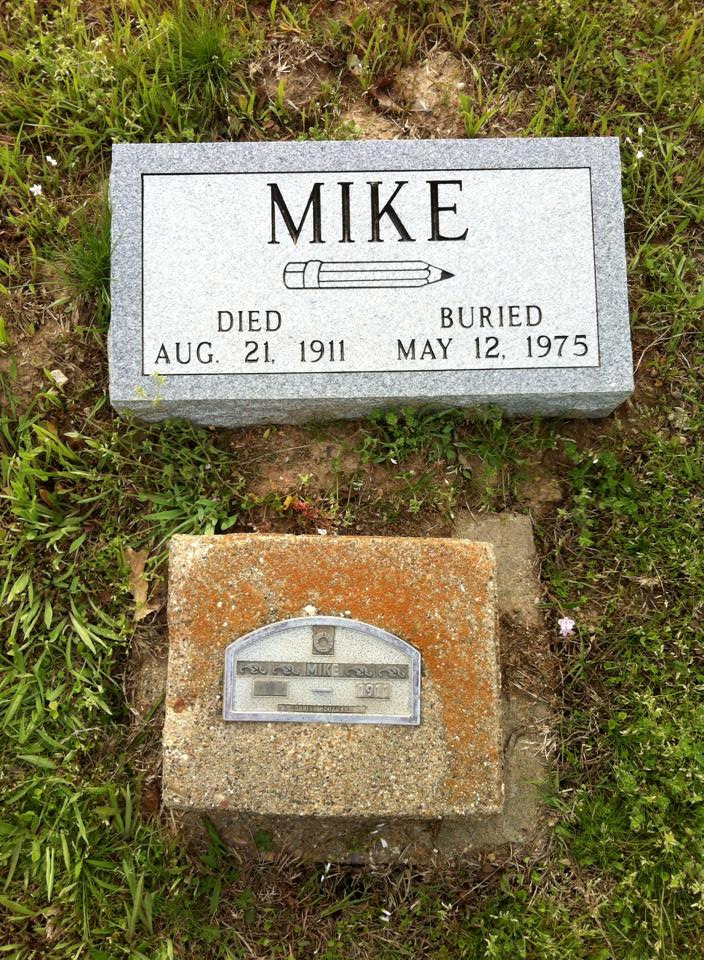
Cornish Funeral Home paid for the burial, and Mike was finally laid to rest at DeAnn Cemetery, nearly 64 years after someone found his body in the city park. At first, his grave was marked by a simple metal marker, but a more permanent headstone was installed later. It gives the date of his death as August 21, 1911, and his burial date as May 12, 1975. And there's something else on that headstone that's rather interesting. A pencil.
If you've heard any part of this story before, you've probably heard that Mike was a traveling pencil salesman, and that little pencil on his gravestone reflects that belief. But remember what we found in the original 1911 newspaper account. The authorities discovered a few pencils among his belongings, but that doesn't necessarily mean he made his living selling them. I've got a couple of pens in my truck right now, but that doesn't mean I'm in the pen business. It's certainly possible he sold pencils, and maybe that's exactly what he was doing when he ended up in Prescott. But we haven't found anything that proves that. Still, whoever arranged for that headstone chose to remember him as a pencil salesman, and after all these years without anybody establishing his real identity, I suppose that's as reasonable a choice as any. But what's remarkable to me is that Old Mike went into the ground with essentially the same mystery he carried into Prescott back in 1911. Nobody knew his real name. Nobody knew where he came from. And nobody knew what caused his death. For 64 years, his body had been kept above ground in the hope that somebody might recognize him. And in the end, he was buried without anyone ever being able to say for certain who he was.
But the mystery doesn't have to remain unsolved forever. There's something available to investigators today that nobody in Prescott could have imagined back in 1911. DNA.
You've probably heard stories about cold cases being solved decades later because investigators recovered DNA from old evidence and used genetic genealogy to identify someone. Hell, there are dozens of podcasts about just that sort of thing. Sometimes it's a murder victim, sometimes it's a suspect, and sometimes it's an unidentified person whose family has been wondering what happened to them for years. So, could somebody do the same thing with Old Mike? Possibly.
As far as I've been able to determine, nobody has publicly documented an attempt to exhume Mike's remains and conduct DNA testing. That doesn't mean it hasn't been considered, but I haven't found evidence that it's actually been done. And I seriously doubt it's as simple as digging him up, scraping off a few skin flakes, and throwing the dirt back over him. Remember, Mike died way back in 1911. His body was embalmed and he's been buried since 1975. Those are all factors that could make recovering usable DNA a whole lot more difficult than collecting a sample from somebody who died last week. Then you've got questions about permission to exhume the remains. Who'd authorize the testing? How much would it cost? And would there even be enough genetic material left to work with?
Interestingly enough, modern forensic genealogy doesn't require someone who knew Mike personally to identify him. If usable DNA could be recovered, investigators might be able to compare it with genetic information from distant relatives and work backward through family records to establish his identity. We see stories about unexpected family connections in the news all the time. Heck, look at that Apple TV show Brothers, with Matthew McConaughey and Woody Harrelson, playing on the possibility that the two actors might actually be related. Now that's a comedy built around an unconfirmed family connection, but the underlying concept is similar. Sometimes the family tree isn't exactly what everybody thought it was. And if someone could recover usable DNA from Old Mike, who knows what they might find? Maybe they'd find a connection to a family in Chicago, and that story about the brother would suddenly make a whole lot more sense. Or perhaps his name really was Estes. Then again, maybe neither of those leads amount to anything, and after all these years, we'd discover that Old Mike was actually Jimmy, or Clarence, or something completely different that nobody ever thought to investigate. At this point, we simply don't know.
There's something a little ironic about the possibility that a mystery nobody could solve while the man was standing in a funeral home might eventually be solved more than 50 years after he was buried. For 64 years, people looked Old Mike right in the face, hoping somebody would recognize him. And perhaps someday, somebody who never laid eyes on him might finally be able to tell us who he really was. Whether that ever happens remains to be seen.
But even if we never learn his real name, there's another part of this story that's worth remembering. Because while the people of Prescott never figured out who Old Mike was, they certainly didn't forget him. And in a rather unusual way, he became part of their lives.
There's something about this whole story that I find rather fascinating. We know quite a bit about what happened to Old Mike after he died, but almost nothing about what happened to him while he was still alive. We know where his body was found, what he was carrying, what he looked like, and even some of the people who might have encountered him in the days before his death. We know who embalmed him, where he spent the next 64 years, and who finally buried him. But we don't know his real name, where he grew up, what he did for a living, or whether he had a family waiting for him back home. And yet, somehow, this guy became part of the childhood memories of an entire generation of people from Prescott.
Now close your eyes, if you're not driving, and think about the town where you grew up for a minute. There are probably places and people you remember that wouldn't mean a thing to someone who wasn't from there. Maybe an old store you used to visit, a restaurant your family frequented, or some local character everybody seemed to know. Those memories stick with you long after you've moved away and the places themselves have disappeared. That's certainly what happened with Fran. She remembered her sister Rita taking her to the funeral home. The little room just inside the side entrance, and the man in the dark suit with the strange eyes. She remembered asking questions, going back to visit him over the years, and even having entire conversations with him. And here's something she wrote that I think tells us a lot about how people in Prescott regarded Old Mike. "He was part of my Prescott years. I will never forget him." That's a pretty remarkable thing to say about somebody who'd already been dead for nearly 37 years before you ever met him. But I think it also explains why we're still talking about Old Mike more than a century after his death.
Nobody knew who he was when he arrived in Prescott, and nobody ever managed to find out. But the people who came to see him didn't forget him. And they passed those memories along to the people who've continued telling his story long after the people themselves have passed on. That's one of the things I love about researching these stories. I originally came across Old Mike while looking for unusual history along the I-30 corridor. After looking into the story, I reached out to some of my wife's family around the area to see whether anyone remembered him. Not only had Fran heard of him, she'd actually met him, well, as much as you can meet someone who's been dead for nearly 37 years. And thanks to her willingness to share those memories, we have another firsthand account of what it was like to visit Old Mike nearly 80 years ago. And when you think about it, that's a pretty unusual way for someone to become part of a town's history, which brings us right back to where we started. Interstate 30.
So, the next time you're driving down I-30 near Prescott, and you feel like getting out to stretch your legs, why not stop by DeAnn Cemetery and pay Old Mike a visit? He's still there, and while you can't have a conversation with him like Fran once did, you can certainly pay your respects and discover a little piece of Arkansas history along the way.
This has been What's Outside the Window, and I'm Rick Wayland. You can find more about Old Mike, including Fran's first-hand recollections, additional historical information, and sources we used in researching this episode at whatsoutsidethewindow.com. I'd especially like to thank Lauren DeVecco and James Weddington at the UA Little Rock Center for Arkansas History and Culture, along with the other historians, researchers, and archivists who graciously assisted us along the way. And, of course, a special thank you to Fran for sharing her memories of Old Mike. Thanks for riding along with me today, and remember, wherever the road takes you, there are always stories hiding just outside the window.
Listener notes
Join the Conversation
Share a thought, correction, local memory, or a story from the road. Your email address is never published.